

Hydroxypinacolone Retinoate Structural Formula
Publish Time:
2026-10-03
Hydroxypinacolone Retinoate Structural Formula
```html
What Is the Structural Formula of Hydroxypinacolone Retinoate? A Detailed Explanation of the HPR Molecular Structure, Molecular Formula, and CAS Number
The structural formula of Hydroxypinacolone Retinoate is one of the first things many cosmetics R&D personnel and raw material procurement staff need to confirm when learning about HPR (Hydroxypinacolone Retinoate). Hydroxypinacolone Retinoate is a retinoate ester compound, with a CAS number of
893412-73-2and a molecular formula of
C26H38O3
with a relative molecular mass of approximately
398.58。
From the perspective of molecular structure, Hydroxypinacolone Retinoate retains the typical conjugated polyene structure of vitamin A compounds, while the carboxyl group at the end of retinoic acid has been esterified to form a new ester group structure. This article will explain the structural formula, molecular formula, structural characteristics, SMILES, and practical methods for identifying the raw material of Hydroxypinacolone Retinoate.
I. Basic Information on the Structural Formula of Hydroxypinacolone Retinoate
| Chinese Name | Hydroxypinacolone Retinoate |
| English Name | Hydroxypinacolone Retinoate |
| Common Abbreviation | HPR |
| CAS Number | 893412-73-2 |
| Molecular Formula | C26H38O3 |
| Molecular Weight | Approx. 398.58 g/mol |
| PubChem CID | 25054592 |
| InChIKey | XLPLFRLIWKRQFT-XUJYDZMUSA-N |
It should be noted that
structural formula and molecular formula are not the same concept
. C26H38O3 only indicates that one hydroxypinacolone retinoate molecule contains 26 carbon atoms, 38 hydrogen atoms, and 3 oxygen atoms, while the structural formula further shows how these atoms are specifically connected to each other.

II. What are the structural characteristics of hydroxypinacolone retinoate?
From the structural formula of hydroxypinacolone retinoate, it can be seen that its molecule is not a simple short-chain ester, but has relatively obvious structural characteristics of retinoid compounds.
1. It has a typical retinoid conjugated polyene structure
The HPR molecule contains a continuous unsaturated carbon chain and multiple conjugated double bonds, which is also one of the important structural features of Retinoid compounds.
One end of its structure contains a cyclohexene structure with methyl substitution, followed by a longer conjugated polyene chain, and then an ester group and a branched-chain structure containing a carbonyl group.
2. It is an ester derivative of retinoic acid
From the perspective of chemical structure, Hydroxypinacolone Retinoate can be represented as an ester derivative formed from retinoic acid.
One of its systematic names is:
(3,3-dimethyl-2-oxobutyl) (2E,4E,6E,8E)-3,7-dimethyl-9-(2,6,6-trimethylcyclohexen-1-yl)nona-2,4,6,8-tetraenoate
Although this name is relatively long, it already describes important information such as the double bond positions, substituents, and ester structure in the HPR molecule.
3. The molecule contains 3 oxygen atoms
The molecular formula of Hydroxypinacolone Retinoate is C26H38O3, in which the 3 oxygen atoms mainly come from the ester group and carbonyl-related structures.
Therefore, through the HPR structural formula, one can not only see the retinoid conjugated skeleton, but also directly observe the esterified portion that differs from the ordinary retinol structure.
III. SMILES Structural Expression of Hydroxypinacolone Retinoate
In addition to the common two-dimensional chemical structure diagrams, SMILES is also frequently used in chemical databases, ingredient databases, and scientific research materials to represent compound structures.
The structure of Hydroxypinacolone Retinoate recorded in PubChem can be represented by the following SMILES:
CC1=C(C(CCC1)(C)C)\/C=C\/C(=C\/C=C\/C(=C\/C(=O)OCC(=O)C(C)(C)C)\/C)\/C
SMILES is a method of converting molecular structures into text characters, mainly used for chemical database retrieval, structure searching, and molecular identification in chemical information software.
For ordinary cosmetic ingredient procurement, there is no need to memorize the complete SMILES. However, if you need to verify structural data, CAS information, or third-party testing documents provided by suppliers, SMILES, InChIKey, and CAS numbers can serve as auxiliary identification information.
4. What is the difference between the structural formula and molecular formula of hydroxypinacolone retinoate?
When searching for "hydroxypinacolone retinoate structural formula", you will often see C26H38O3 at the same time, making it easy to confuse the two.
In fact:
Molecular formula:
C26H38O3
It can only indicate the number of each element in the HPR molecule.
Structural formula:
It shows how the 26 carbon atoms, 38 hydrogen atoms, and 3 oxygen atoms are specifically connected, and can also display information such as double bonds, ester bonds, carbonyl groups, and ring structures.
Therefore, when determining whether a substance is Hydroxypinacolone Retinoate, merely seeing C26H38O3 is not enough; a more rigorous approach is to simultaneously verify
CAS number, structural formula, molecular formula, molecular weight, and analytical testing data
。
5. Why does Hydroxypinacolone Retinoate belong to the Retinoid structural class?
The structure of HPR contains the representative cyclic terminal and conjugated polyene chain structure of Retinoid compounds.
From the perspective of structural origin, it can be understood as an ester derivative of retinoic acid; therefore, in English materials, in addition to Hydroxypinacolone Retinoate, you may also see
Retinoic acid, 3,3-dimethyl-2-oxobutyl ester
this name.
Databases such as FDA GSRS also map CAS 893412-73-2 to Hydroxypinacolone Retinoate and record its molecular formula as C26H38O3.
6. How can structural information be used to confirm whether a substance is Hydroxypinacolone Retinoate?
If a cosmetics company is purchasing HPR raw materials, it is advisable not to judge based solely on the product name; instead, focus on checking the following information.
1. Verify the CAS Number
The commonly used CAS number for Hydroxypinacolone Retinoate is:
893412-73-2
2. Verify the Molecular Formula
The corresponding molecular formula should be:
C26H38O3
3. Verify the Molecular Weight
The relative molecular mass recorded in public chemical databases is approximately:
398.58–398.6 g/mol
4. Check the COA and Testing Documentation
For raw material procurement, verifying the structural formula alone cannot replace actual quality testing. When purchasing, you should also make a judgment based on the COA, HPLC test results, and necessary structural characterization data provided by the supplier.
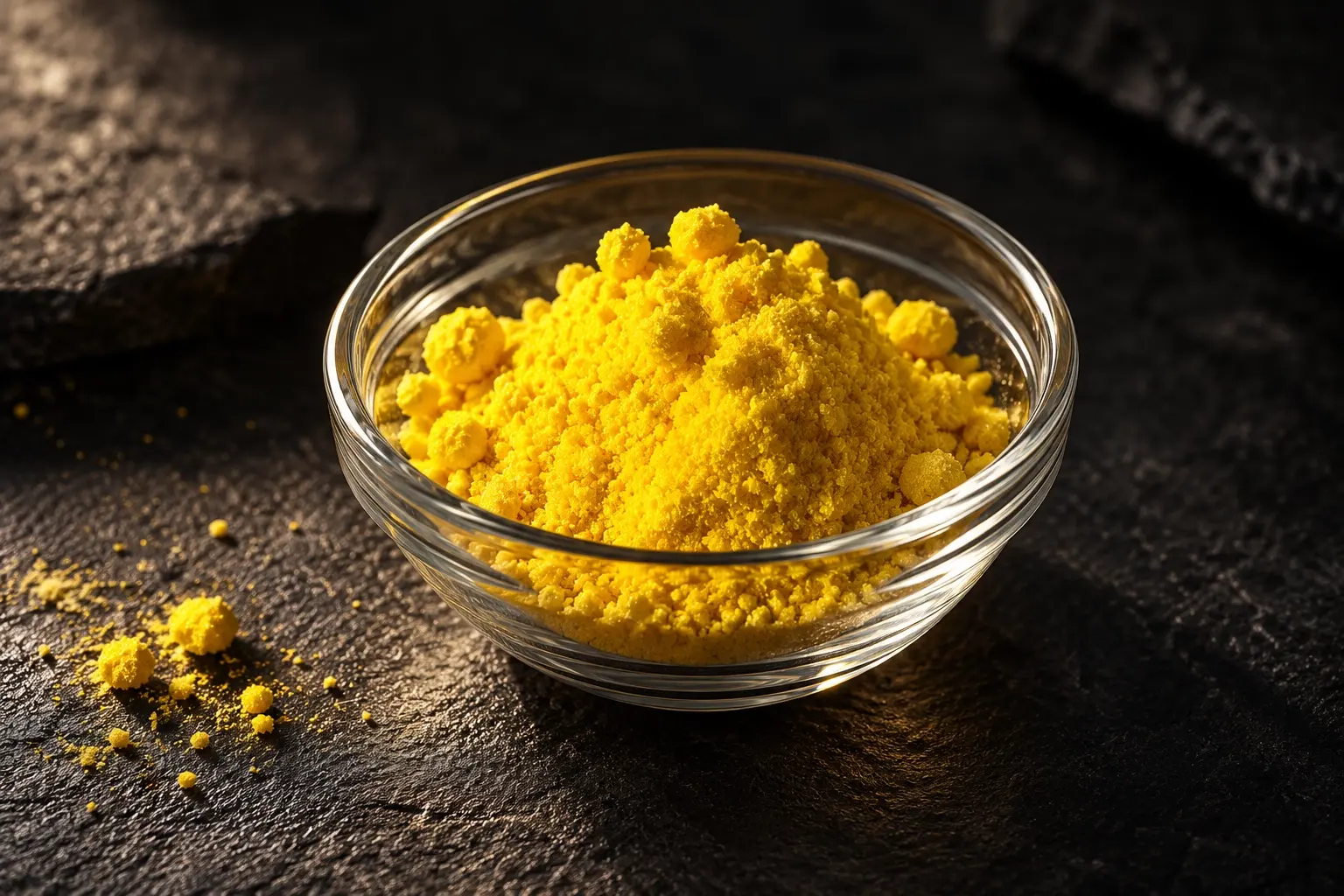
If you are purchasing high-purity HPR powder, you can further request that the supplier provide batch test reports as well as necessary NMR, HPLC, and other testing documentation to confirm the identity and purity of the raw material.
VII. Hydroxypinacolone Retinoate Structural Formula FAQ
What is the molecular formula of Hydroxypinacolone Retinoate?
The molecular formula of Hydroxypinacolone Retinoate is
C26H38O3
。
What is the molecular weight of Hydroxypinacolone Retinoate?
Its molecular weight is approximately
398.58 g/mol
, and the decimal places shown may vary slightly across different databases, for example 398.58, 398.59, or 398.6, which usually results from different calculation and rounding methods.
What is the CAS number of Hydroxypinacolone Retinoate?
The CAS number corresponding to Hydroxypinacolone Retinoate is
893412-73-2。
Is HPR the same as Hydroxypinacolone Retinoate?
In cosmetic raw materials and related technical documents, HPR is usually used as the abbreviation for Hydroxypinacolone Retinoate.
Is the structural formula of Hydroxypinacolone Retinoate the same as that of Retinol?
No. Although both belong to vitamin A-related compounds and share some similar Retinoid backbone features, Hydroxypinacolone Retinoate has different terminal functional groups and ester structures, so its molecular formula, molecular weight, and complete chemical structure are all different from Retinol.
VIII. Summary
The CAS number of Hydroxypinacolone Retinoate (HPR) is
893412-73-2and a molecular formula of
C26H38O3
, and its molecular weight is approximately
398.58 g/mol
。
From the structural formula of Hydroxypinacolone Retinoate, it can be seen that its molecule contains a typical Retinoid conjugated polyene structure, along with ester and carbonyl-related structures. For R&D or procurement personnel, the structural formula helps in understanding the chemical identity of HPR, but in actual raw material procurement and quality assessment, CAS number, COA, HPLC, and necessary NMR testing data should also be verified.
Therefore, when searching for the "Hydroxypinacolone Retinoate structural formula," it is recommended not to rely on a single structural image alone, but to combine
structural formula, CAS number, molecular formula, molecular weight, and testing data
for evaluation.
```
Tags:
Related News
Hydroxypinacolone Retinoate Benefits
2026-10-03
Hydroxypinacolone Retinoate Benefits
2026-10-03
How to pronounce Hydroxypinacolone Retinoate
2026-10-03
Hydroxypinacolone Retinoate Pinyin
2026-10-03